Busy Bees Blog
Welcome to the Busy Bees Blog!
This Blog provides just an insight of life at Busy Bees Preschool, where children learn and grow in a nurturing environment. We will share with you our values, aims and our approach to delivering the a rich and informed curriculum.
We will provide insights on various early years topics and guide you to additional resources on related subjects.
Enjoy!
  |
Toilet training can be seen as a real milestone in children's development and as an early years setting our parents often ask us for advice. When should I start? What signs should I be looking out for? How do I establish good toileting habits?
We direct families to ERIC, the children's bladder and bowel charity for evidence based practical advice. All our staff have completed training from ERIC so we can work together towards this essential skill. Take a look at the ERIC website to find out more about their recommended approach. https://eric.org.uk/potty-training/ .
| |
Promoting a healthy lifestyle
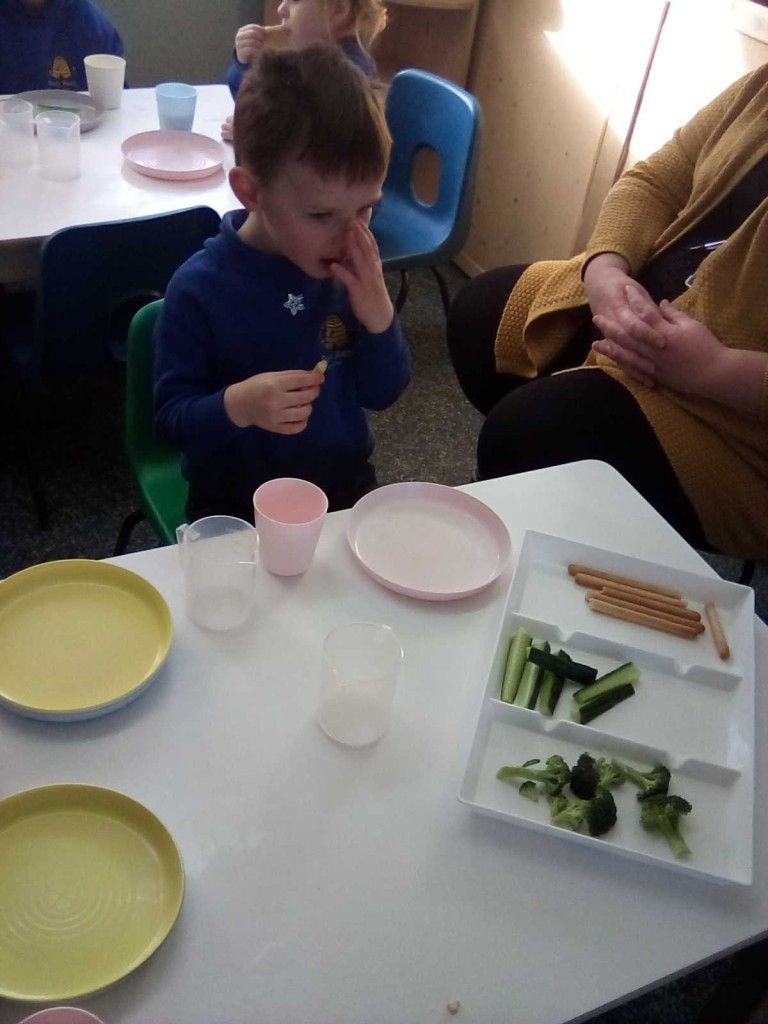
As we all know healthy food is important for growing children and developing healthy habits in childhood can support healthy habits for life. The Early Years Foundation Stage statutory guidance highlights our responsibility to provide nutritious food and promote healthy eating. So how do we approach this at Busy Bees? Firstly we are not here to judge or shame parents, we understand the challenges parents face when feeding their children, particularly fussy eaters. While your child is with us we use our snack time to offer a range of nutritious foods, some familiar, some they might not have had before. Children are encouraged to touch foods, smell them, talk about them as well as taste them. It is a relaxed time where there is no pressure to eat if they don't want to. We take a similar approach if you choose for your child to have a hot lunch. Many of the foods will be familiar to them, but not all, and they are likely to be presented differently. Did you know you might have to serve a new food up to 20 times before your child will accept it, lots of patience is needed!
We believe that building a healthy relationship with food is just as important as a healthy diet. For us this means not labelling foods as good or bad. It also means letting the child choose how much to eat. If we don't respect when a child tells us they are full they could stop listening to their body's signals and accidently over eat.
If you are ever worried about how much your child is eating or if you worry their diet is too restricted we recommend you contact your health visitor for reassurance and support.
| |
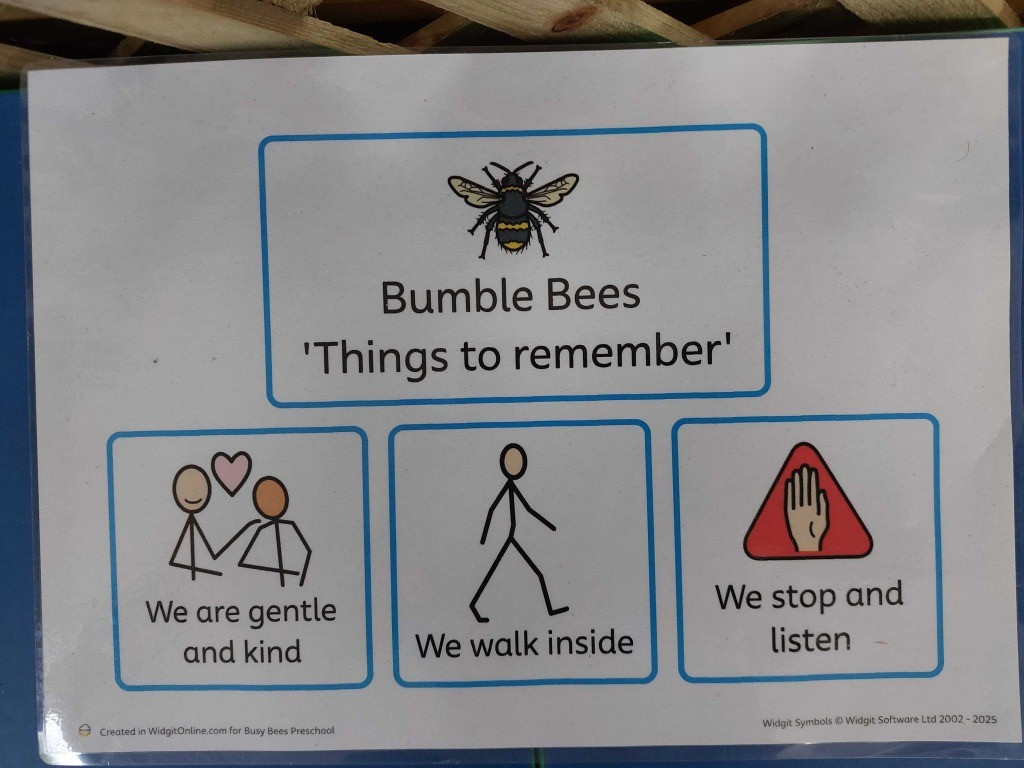
Our 'Things to remember' are the behaviours we are encouraging in all children to keep us all happy and safe - our 'rules' if you like. You might have heard your child talk about them so we would like to share them with you and explain how they work.
In Bumble Bees we introduce the following;
We are gentle and kind -
At this young age many children are not able to understand that their actions can hurt others. They are still learning to control their bodies and can accidently be too rough. They are also learning about cause and effect so some unkind actions are done out of curiosity rather than a genuine desire to hurt. We teach children though demonstrating what kind and gentle play looks like and feels like.
We walk inside -
This is about safety and takes a lot of self-control!Children sometimes don't realise they are running, we walk with them to show them the difference. Often children are better at noticing running in others than in themselves!
We stop and listen -
This is about children being able to stop themselves from doing something when asked and is necessary to keep children safe. Their self-control is still developing so we need to practice, practice , practice.
When children progress to Honey Bees 'Things to remember' develops to;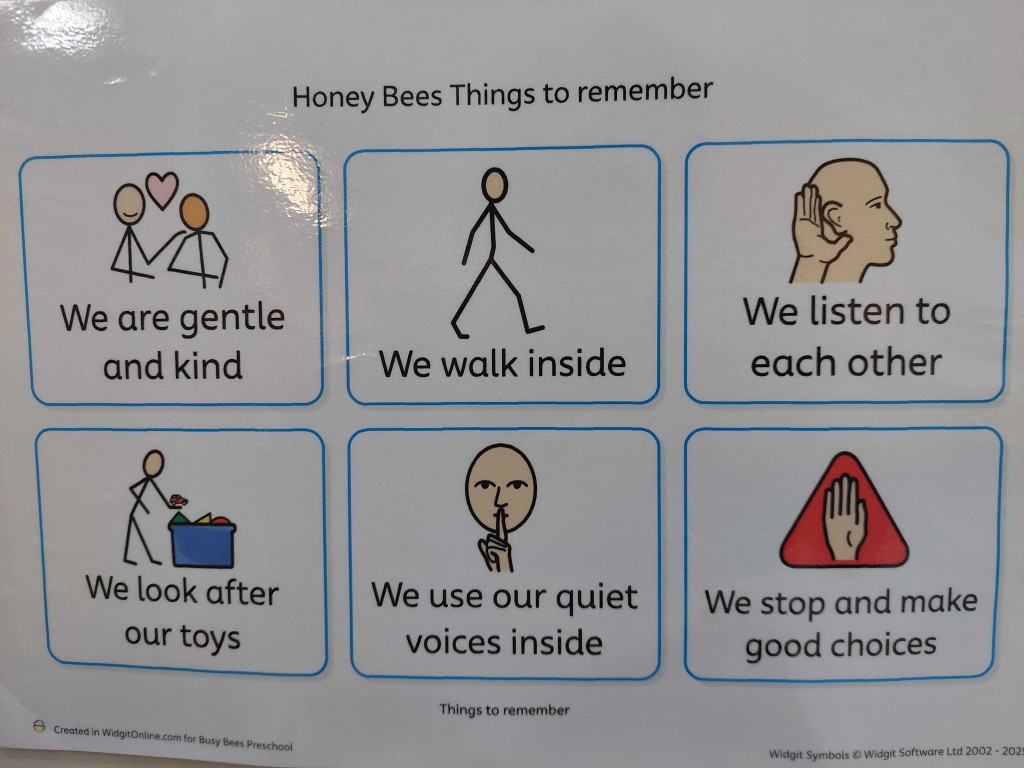 We are gentle and kind -
Around age 3 children begin to understand they can hurt others and make them sad. We begin to teach children that words can upset people too. Friendships begin to develop between children and we talk about feelings and strategies to help us get along together.
We walk inside -
As children get bigger there simply isn't room inside. Lots of praise when we notice great walking usually works with this one.
We listen to each other -
This means listening when adults are talking to you and listening to other children when they try to negotiate during play. We expect children to comply with reasonable requests so we can keep them safe and the room runs smoothly.
We look after our toys -
Tidying up becomes part of children's routines and, although accidents will always happen, children are able to handle objects and books carefully and respectfully.
We stop and make good choices -
The children are still very young and still learning how to manage themselves, their wants, needs and feelings. We are teaching them to be able to stop when asked to, and be able to think about what a better choice might be.
'Things to remember' is just one part of our behaviour management policy. If you would like more information about this or are ever worried about your child's behaviour please get in touch. We don't pretend to have all the answers, but working together always produces the best outcomes for children.
| |

10th February is this year's Safer Internet Day. This has prompted us to share with you how we approach this at Busy Bees and offer suggestions for how you might want to manage things at home.
At Busy Bees each member of staff has a tablet but children are not allowed to touch them. The screen is locked with a pin to prevent access. Although children are not allowed to use them, staff do use these tablets to enhance children's learning. This might be using the internet to help answer a child's question or to show them a picture or video of something we are learning about. We use them to play music and stories, usually with the screen turned away. We use videos to support dance, yoga and other physical activities where the objective is to copy the moves they see on screen. And of course we use them to take photos and share updates with you via Tapestry. Children are often excited to see pictures we have taken. We have taken this approach because, most children, in some form or another, will have had access to touch screen devices at home. We therefore don't feel it's a necessary skill for us to teach in preschool.
Devices such as tablets and phones are part of modern life and so it's important that children are taught how to use them safely. We are sure that, as a family, you have your own rules and expectations around internet and screen use, but if this is something you are new to, below are some of the things we would suggest you consider.
* Use the internet with your child. Show them how you can search for information and how it can be a really useful tool beyond just playing games or watching videos.
* Teach children to ask first before using a device. You can't supervise what they are doing if they have free access whenever they like. Make sure screens are locked with a
pin or password in case children are tempted. It's also wise to ensure you have to put a password in to make in-app purchases so your child can't accidently buy things.
* Take a look at what parental controls are available on your devices, apps or through your internet provider. Remember these are never 100% foolproof so make sure your
child uses the tablet in the same room as you so you can keep an eye on what they are watching/playing.
* Sounds obvious but make sure your child only has access to age appropriate apps and websites. * Be mindful of what older siblings or other family members might be watching when young children are around.
* Talk with your child about what they are doing and seeing online, encourage open dialogue and show an interest in their interests.
* Teach them what to do if they ever see anything that scares or upsets them. We suggest something as simple as 'turn tablet over and
shout for mummy or daddy'.
* Model healthy online habits yourself. Are you on your phone or tablet all the time? Do you put it away during meals for example?
Next week, the older children will hear the story 'Clickin Chicken' which tells the story of a chick who meets a friend on the internet but they are not who them seem. They will also take part in a small group, age appropriate, discussion about keeping safe online. The key messages will be
ask mummy or daddy before using a tablet or computer and tell an adult if you see something which scares or upsets you.
For more on this topic see www.visitinternetmatter.org/advice/0-5/ which has advice for older children too.
| |
Promoting a healthy lifestyle- Oral Health
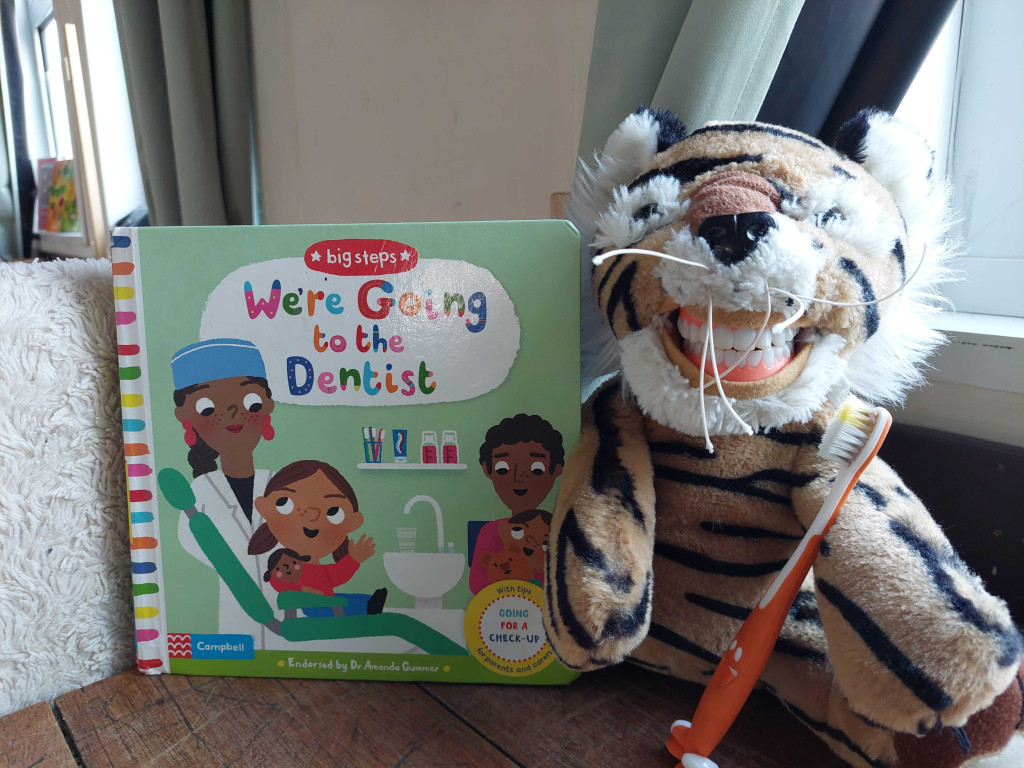
Promoting oral health is one of the statutory parts of the EYFS framework, so looking after our teeth is something we sensitively weave into play and conversations wherever we can.
To prompt conversations with your child at home they will all be bringing home a little pack containing a toothbrush and their very own toothpaste.
We all know the importance of brushing our teeth but avoiding food and drinks which harm young children's teeth isn't always as straightforward. Clever marketing can lead us to believe that products are healthy when they really aren't.
We have really noticed this with processed snacks aimed at young children. Did you know that some of the fruity snacks (things like Fruit zone, Fruity stars or Yo yo bear) have more sugar per 100g than Haribo sweets! Even those which do not contain any added sugar or syrup! Yes, we were shocked too. We no longer give children dried fruit as part of our snacks anymore, because of the high sugar content and the fact they stick to teeth.
If you would like to read more about taking care of your child's teeth then please visit...https://www.communitydentalservices.co.uk/oral-health-improvement/resources/
If your child isn't registered with a dentist the link below can help you find one accepting new patients...https://www.nhs.uk/service-search/find-a-dentist/
| |
Transition to School- April 26
This time of year there is always some talk among the children about ‘big school’ so here is some information about our approach to this as well as a few practical hits and tips.
We understand this can be an anxious time and this message just gives a few things to think about at this early stage. How we respond as adults goes a long way towards setting the tone for your child’s experience. We have been preparing your child for this from their very first day with us and will support you as much as we can.
• In our experience it is far too early to be talking about primary school with your child just yet. September is still 5 months away, a very long time when you are possibly not even 4 yet! We start to talk about it in June or July, around the time children begin to visit their new schools. Children of this age have no concept of time and may think they will start tomorrow or next week which can cause children to become unsettled.
• With this in mind, it’s best to not talk about starting school in front of your child at this stage, particularly if you are disappointed or unhappy with the place offered. Children will pick up on your negativity or worries.
• Make sure any conversations or comments your child does hear about school are calm and positive. It is tempting to use talk of school when managing children’s behaviour, e.g “you won’t be allowed to do this when you go to school” but these kinds of comments are really unhelpful.
• Please let us know where your child has been offered, we do not get told directly. Behind the scenes planning and contact from reception class teachers begins pretty quickly.
• If you are unhappy with the place offered and wish to appeal, please visit Wiltshire council school admission web pages for further advice. Please note we have no influence over any appeal decisions and, as a general rule, cannot get involved, so please don’t ask us to.
• Remember to follow the acceptance instructions.
• Moving forwards, it is quite normal for children to become a little unsettled at some point over the next few months. Despite our best efforts, children sense a change is coming but can’t quite make sense of it. They may become more sensitive and tearful or they might begin to push behavioural boundaries or suddenly not want to be away from you. Keep calm and consistent, it will pass!
• Your child will not be expected to know things like lots of letters or be reading and writing already. Reception classes follow the same curriculum we do and will pick up where we leave off. The key things to make sure they are confident with are; sitting and listening, following instructions and rules, getting along with others and being independent….especially when using the toilet!
More information and advice around how to prepare your child for school will be shared a little nearer to the time. In the meantime, if you have any worries or concerns about your child starting school please don’t hesitate to get in touch.
For more information go to Home - Starting Reception
| |
Early Literacy
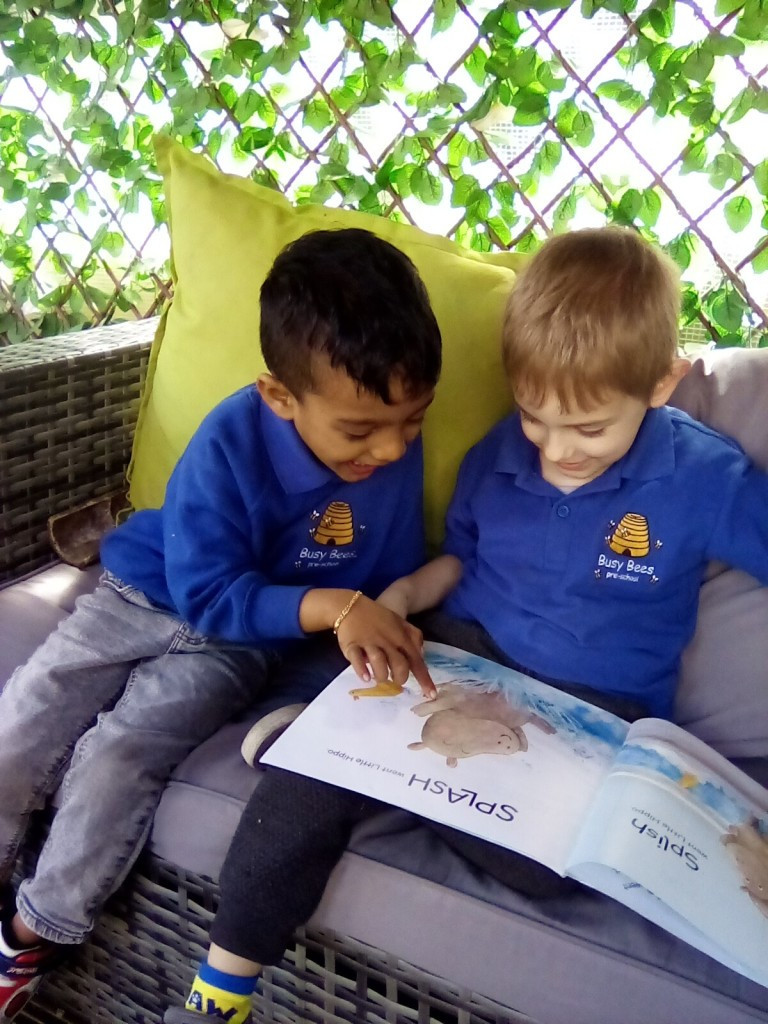
Developing a love of books and reading is really important. By sharing a book with an adult children learn how books work, that the print carries meaning and the pictures help tell the story. Before children can learn to recognise, and then read, letters and words for themselves they need to tune up their visual discrimination and visual memory skills. They need to be able to notice the subtle differences between letter shapes and be able to remember what each one looks like. We support this through activities like matching games, memory games and jigsaw puzzles. Of course they also need to know the phonic sound each letter makes, however before they can do that we need to tune up their listening skills! They need to be able to distinguish between lots of different everyday sounds like animals or vehicles before they can hear the subtle differences between phonic sounds and pick them out in spoken words. We work on this phonological awareness through rhyming activities, clapping out syllables and breaking down words with our robot voices. With all this groundwork in place, your child will be ready to pull it all together and engage with whatever phonics scheme is used to teach reading when they get to reception class.
Meanwhile writing is developing as children give meaning to the different marks they make. You will begin to notice that children start to imitate adult writing, for example, lots of wiggly lines. This is an important stage and must never be dismissed as ‘scribble’. We encourage lots of different types of lines such as circles and zigzags which help children to make the shapes which will eventually form letters. We don’t teach letter formation because all schools have their own style in which they want letters formed, however we celebrate all attempts children make at forming letters in their own way. Writing is incorporated into lots of different play opportunities such as taking orders in the role play café or making a birthday card in the craft area.
Reading and writing are such fundamental skills, and we am to give children the best start we possibly can. Our curriculum
| |

Well-being- Changing needs of the children
As explained in an earlier blog about starting school, it's quite normal for children to be a little out of sorts at this time of year. Maybe you have noticed your own child behaving differently or coming home talking about things which have happened. The purpose of this message is to explain how we are approaching it and to reassure you.
They have heard talk of 'big school' but don't really understand what it actually means or what it will actually be like. It is also worth noting that around this age children take a leap in their social development. Their peers become more important to them so we see a shift from wanting to please adults to wanting to impress other children instead. Whilst it is lovely to see children exploding in confidence and forming these social groups, it brings new challenges for them to negotiate. Hurting or upsetting each other is rarely the intended outcome but does inevitably happen, even between 'best friends'.
Behaviours that we may experience at this tricky time of year may include lots of very silly and unkind behaviour with children egging each other on to escalate things. The kinds of things we are referring to are name calling, mimicking each other and adults, throwing things, breaking things and other similar behaviour designed to make their peers laugh. They might even hit or kick, either out of silliness or in response to the behaviour of others.
We want to offer reassurance, that while the behaviour is developmentally normal, we do not accept it. During terms 5 & 6 our behaviour management techniques adapt to meet this change and this is how we approach it.
Where we can safely ignore behaviour we always do so. It is generally preferable to focus our attention on those children behaving well and not draw attention to those who are not. Where this isn't safe or practical, for example if someone is getting upset, or other children are joining in or copying, we operate a 3 step approach.
Step 1 - The first response is a short phrase such as "no thank you", delivered in a neutral tone to indicate the behaviour is unwelcome without giving too much attention.
Step 2 - If children continue, we speak to children individually using a firm but quiet voice, making it clear exactly what was unacceptable and explain the behaviour we want to see instead.
Step 3 - Where behaviour persists after this, the child will be separated from the other children for a few minutes to break the cycle of behaviour and give them a chance to reflect. Children are never sent away by themselves or made to sit on a chair/step. It just means removing their audience and going to a quieter space for a short while. We refer to this as 'taking a break'. They will then be able to re-join their friends and make a fresh start.
We understand that children are still learning to manage big feelings, including frustration, disappointment and anger. These situations are dealt with differently using a trauma informed approach as detailed in our behaviour policy. Where children have been hurt or upset by the words or actions of others we always ensure that the upset child receives attention first.
It is important to note that children have now reached a stage where they will change their behaviour depending on whether they believe an adult is watching or not! Therefore children must develop the confidence to tell an adult if someone hurts or upsets them. In school there will be less adults in the room so speaking up will be even more important.
How parents can help at home - I'm sure you have boundaries in place at home around kind and respectful behaviour, so just make sure you keep on being consistent with those. Consistency and following through with boundaries really is the best way to help children through this stage. If you decide to give consequences we would advise they are immediate and are logical so the child can learn from them. Taking away a treat later in the day is not always effective at this age because they might not link the 2 events. Where we feel individual children's behaviour is particularly out of character or worrisome, we will speak with you or if you are ever worried please come and speak to us.